
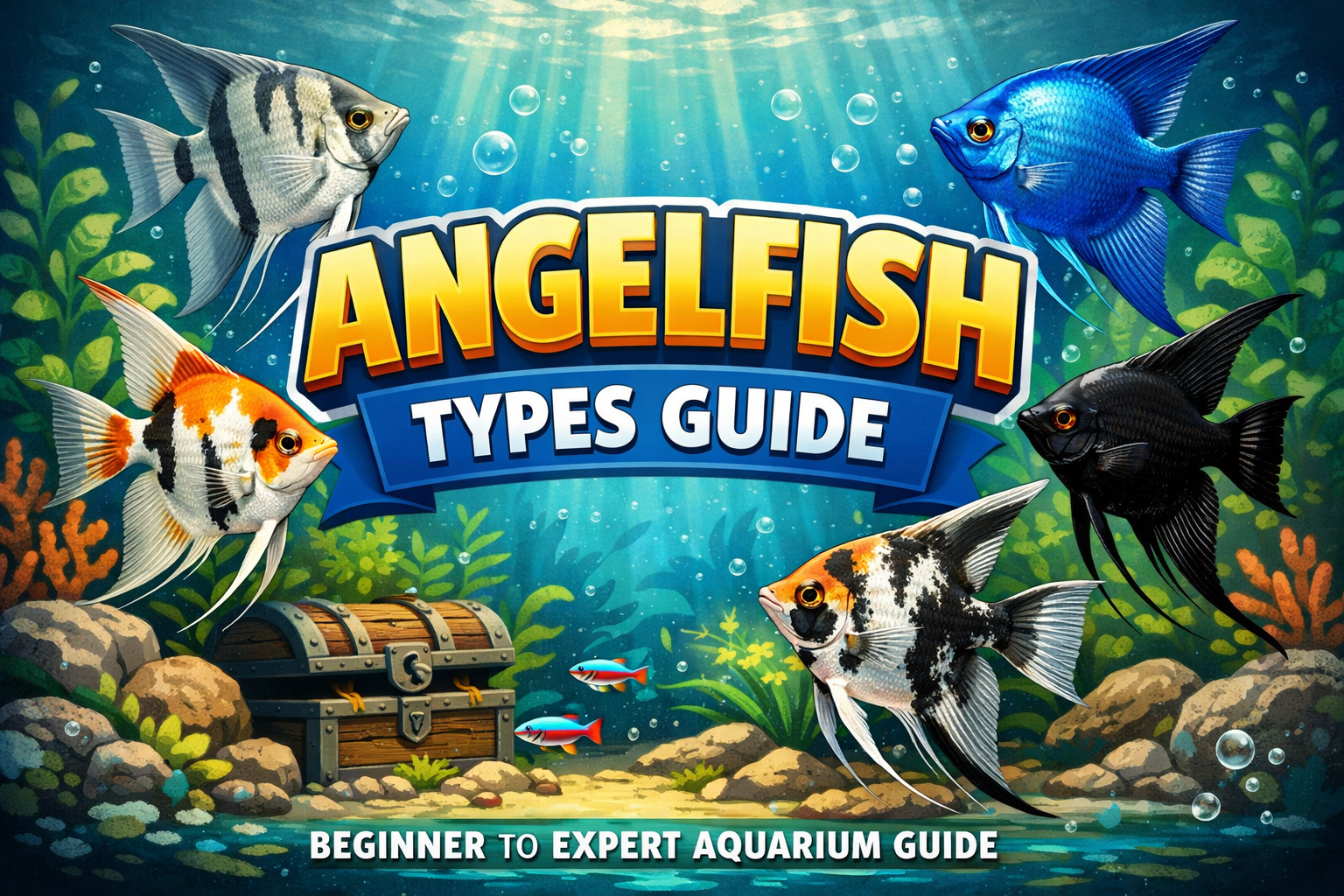

Few freshwater aquarium fish are as elegant and recognizable as the angelfish. With their tall fins, graceful swimming style, and wide range of colors and patterns, angelfish have become one of the most popular centerpiece fish for home aquariums around the world. Whether you are setting up your first tropical tank or expanding an advanced community aquarium, understanding the different types of angelfish can help you choose the perfect variety for your setup. From classic silver angelfish to rare koi, marble, and zebra varieties, the many types of angelfish available today offer something for every aquarium style and experience level.
In this complete guide, we will explore the most popular angelfish types, their appearance, temperament, care requirements, and how to select the right one for your aquarium.
What Are Freshwater Angelfish?
Freshwater angelfish belong to the cichlid family and originate from the Amazon River basin in South America. Despite their peaceful appearance, they are technically cichlids, meaning they can sometimes show territorial behavior, especially during breeding.
The most common aquarium angelfish belong to the species Pterophyllum scalare. Over many decades, selective breeding has produced dozens of stunning color and fin variations.
Angelfish are loved for several reasons:
- Elegant body shape
- Slow, graceful swimming
- Unique personalities
- Compatibility with many tropical fish
- Wide variety of colors and patterns
They are ideal as centerpiece fish in planted aquariums and can thrive for 8–12 years with proper care.
Wild Angelfish
Wild angelfish are the closest form to their natural Amazon ancestors. They usually feature silver bodies with vertical black stripes that help them camouflage among roots and plants in murky waters.
Appearance
- Silver body
- Three to four dark vertical bands
- Long triangular fins
- Slightly slimmer shape than captive-bred strains
Temperament
Wild types are often more cautious and sensitive compared to domesticated strains.
Care Difficulty
Intermediate to advanced. They prefer:
- Stable water parameters
- Soft, slightly acidic water
- Calm environments
Best For
Aquarists who appreciate natural fish behavior and authentic Amazon-style aquariums.
Silver Angelfish
The silver angelfish is the classic aquarium angelfish most hobbyists recognize immediately.
Appearance
- Bright silver body
- Black vertical stripes
- Red or orange eyes
- Traditional angelfish shape
This variety closely resembles wild angelfish but is usually hardier due to generations of captive breeding.
Temperament
Peaceful but semi-territorial during breeding.
Care Level
Beginner friendly.
Why People Love Them
- Timeless appearance
- Hardy and adaptable
- Excellent for community tanks
Silver angelfish are often considered the foundation of most angelfish breeding lines.
Marble Angelfish
Marble angelfish are among the most visually dramatic varieties available.
Appearance
- Swirling black, white, silver, or gold patterns
- Random marbled markings
- Every fish looks unique
No two marble angelfish are exactly alike, which makes them highly attractive to collectors.
Temperament
Similar to standard angelfish:
- Generally peaceful
- Can become territorial during spawning
Tank Setup
Marble angelfish look incredible in:
- Dark background tanks
- Heavily planted aquariums
- Driftwood aquascapes
Popular Variations
- Black marble
- Gold marble
- Blue marble
Koi Angelfish
Koi angelfish are inspired by the coloration of koi carp and are one of the most sought-after designer strains.
Appearance
- White or silver base
- Orange, red, and black markings
- Highly variable patterns
Many koi angelfish develop stronger orange coloration as they mature.
Personality
Active and curious. Many hobbyists describe them as interactive fish.
Care Requirements
Standard angelfish care:
- Temperature: 76–82°F
- pH: 6.5–7.5
- Tall aquarium preferred
Best Tankmates
- Corydoras
- Larger tetras
- Gouramis
- Peaceful rainbowfish
Koi angelfish are especially popular in display tanks because of their vibrant contrast.
Black Angelfish
Black angelfish bring a bold and premium appearance to freshwater aquariums.
Appearance
- Solid black coloration
- Velvet-like finish
- Sometimes slight silver highlights
The deepest black specimens are highly prized among enthusiasts.
Lighting Effects
Under proper aquarium lighting, black angelfish can appear incredibly dramatic and elegant.
Tank Design Tips
They pair beautifully with:
- Green aquatic plants
- Light-colored substrate
- Minimalist aquascapes
Temperament
Usually calm, though mature pairs may become protective.
Gold Angelfish
Gold angelfish add warmth and brightness to tropical aquariums.
Appearance
- Golden yellow or orange body
- Metallic sheen
- Reduced or absent black stripes
Some premium specimens develop almost glowing gold coloration.
Popularity
Gold angelfish are especially attractive in planted aquariums where their colors stand out against greenery.
Care
Easy to moderate. Good water quality is important for maintaining vibrant colors.
Zebra Angelfish
Zebra angelfish are known for their striking striped patterns.
Appearance
- Multiple vertical black stripes
- More bands than standard silver angelfish
- High contrast appearance
The additional stripes create a dramatic and energetic look.
Personality
Generally peaceful, though they may establish social hierarchies within groups.
Aquarium Style
Zebra angelfish fit perfectly in:
- Amazon biotope tanks
- Natural planted aquariums
- Community tropical setups
Veil Angelfish
Veil angelfish are admired for their flowing, elongated fins.
Appearance
- Extra-long dorsal and anal fins
- Elegant trailing appearance
- Available in many colors and patterns
Swimming Style
Their slow, graceful movement resembles underwater silk.
Special Care Considerations
Because of their delicate fins:
- Avoid fin-nipping tankmates
- Ensure moderate water flow
- Keep sharp decorations out of the tank
Ideal Tankmates
- Corydoras catfish
- Peaceful tetras
- Rams
- Dwarf gouramis
Veil angelfish are often chosen for show aquariums due to their dramatic appearance.
Albino Angelfish
Albino angelfish offer a rare and unique look compared to darker varieties.
Appearance
- Pure white or pale cream body
- Pink or red eyes
- Soft reflective scales
Lighting Preferences
They may prefer slightly dimmer environments because of their sensitive eyes.
Tank Recommendations
- Floating plants
- Gentle lighting
- Calm community fish
Albino angelfish create a clean and modern aesthetic in aquariums.
Leopard Angelfish
Leopard angelfish feature beautiful spotted patterns.
Appearance
- Dark spots scattered across the body
- Speckled or leopard-like markings
- Usually silver or gold base color
Popularity
Highly valued among hobbyists seeking unusual patterns.
Care
Standard angelfish care applies, though stable water conditions help maintain pattern quality.
Blue Angelfish
Blue angelfish are relatively newer strains with shimmering iridescent coloration.
Appearance
- Metallic blue shine
- Reflective scales
- Sometimes mixed with silver or black
Under LED aquarium lighting, blue angelfish can appear almost electric.
Tank Aesthetics
Best paired with:
- Dark substrates
- Black backgrounds
- Strong plant contrast
These fish are becoming increasingly popular among aquascaping enthusiasts.
Altum Angelfish
Altum angelfish are considered the “king” of angelfish species.
Scientific Name
Pterophyllum altum
Appearance
- Extremely tall body
- Deep forehead indentation
- Long elegant fins
- Wild striped pattern
Altums are noticeably larger and taller than standard angelfish.
Difficulty Level
Advanced.
Why They Are Challenging
- Sensitive to poor water quality
- Require soft acidic water
- Need very tall aquariums
- More delicate during acclimation
Tank Size
At least 75 gallons is recommended for a group.
Despite the challenge, experienced aquarists often consider altums the most majestic freshwater angelfish available.
Dantum Angelfish
Dantum angelfish are hybrids between standard angelfish and altum angelfish.
Appearance
- Tall body shape
- Elegant fins
- Blend of domestic and wild traits
Benefits
They often combine:
- The beauty of altums
- The hardiness of standard angelfish
Popularity
Increasingly common among breeders and specialty fish stores.
Smokey Angelfish
Smokey angelfish have a subtle and sophisticated appearance.
Appearance
- Dark shading on the rear half of the body
- Gradient effect
- Soft silver-to-black transition
Personality
Calm and adaptable.
Best Use
Excellent centerpiece fish for peaceful community tanks.
Half-Black Angelfish
This striking variety features a dramatic two-tone appearance.
Appearance
- Front half silver
- Rear half solid black
- Sharp dividing line
Care Notes
Their coloration can fade under stress, so:
- Stable water conditions are essential
- High-quality nutrition helps preserve colors
Half-black angelfish are highly eye-catching in minimalist aquariums.
Pearlscale Angelfish
Pearlscale angelfish are known for their textured scales.
Appearance
- Reflective “pearl-like” scales
- Sparkling effect under lighting
- Often combined with other color morphs
Lighting Advantage
LED lighting enhances their shimmering appearance dramatically.
Popular Combinations
- Pearlscale koi
- Pearlscale marble
- Pearlscale gold
Choosing the Right Angelfish for Your Aquarium
When selecting angelfish, consider several important factors.
Tank Size
Angelfish need vertical swimming space.
Recommended Minimums
- Single angelfish: 29 gallons
- Pair: 40 gallons
- Group: 55 gallons or larger
Tall tanks are better than short tanks.
Temperament
Although angelfish are peaceful overall, they can:
- Become territorial
- Eat very small fish
- Defend breeding areas aggressively
Avoid tiny tankmates like neon tetras unless the angelfish are raised with them from a young age.
Water Parameters
Ideal angelfish conditions:
- Temperature: 76–82°F
- pH: 6.5–7.5
- Moderate softness
- Clean, stable water
Regular maintenance is essential.
Diet
Angelfish thrive on a varied diet including:
- High-quality flakes
- Pellets
- Frozen bloodworms
- Brine shrimp
- Spirulina foods
Balanced nutrition supports:
- Growth
- Color enhancement
- Immune health
- Fin development
Best Tankmates for Angelfish
Good companions include:
- Corydoras catfish
- Larger tetras
- German blue rams
- Gouramis
- Rainbowfish
- Plecos
Avoid:
- Fin nippers
- Extremely aggressive cichlids
- Tiny nano fish
Common Beginner Mistakes
Overcrowding
Angelfish need space, especially as adults.
Mixing With Aggressive Fish
Aggressive tankmates can stress angelfish and damage their fins.
Poor Water Quality
Angelfish are sensitive to ammonia and nitrate buildup.
Choosing a Tank That Is Too Small
Their height surprises many beginners.
Final Thoughts
Angelfish remain one of the most iconic freshwater aquarium fish for good reason. Their graceful movement, intelligent personalities, and incredible variety make them a favorite among both beginners and experienced aquarists.
From classic silver angelfish to exotic altums and colorful koi strains, there is an angelfish type suited for nearly every aquarium style. By understanding their unique traits and care requirements, you can create a healthy environment where these stunning fish truly thrive.
Whether you prefer elegant black angelfish, shimmering blue varieties, or long-finned veil strains, angelfish bring beauty, personality, and sophistication to any freshwater aquarium.
With proper care, good nutrition, and thoughtful tank planning, angelfish can become the true centerpiece of your aquatic world.
Leave a Reply