

Introduction
Bottom feeder fish are among the most useful and fascinating species in the aquarium hobby. For beginners, they add movement, personality, and balance to a community tank while helping consume leftover food from the substrate. Among the most popular bottom dwellers are Corydoras catfish, Plecos, and Loaches.
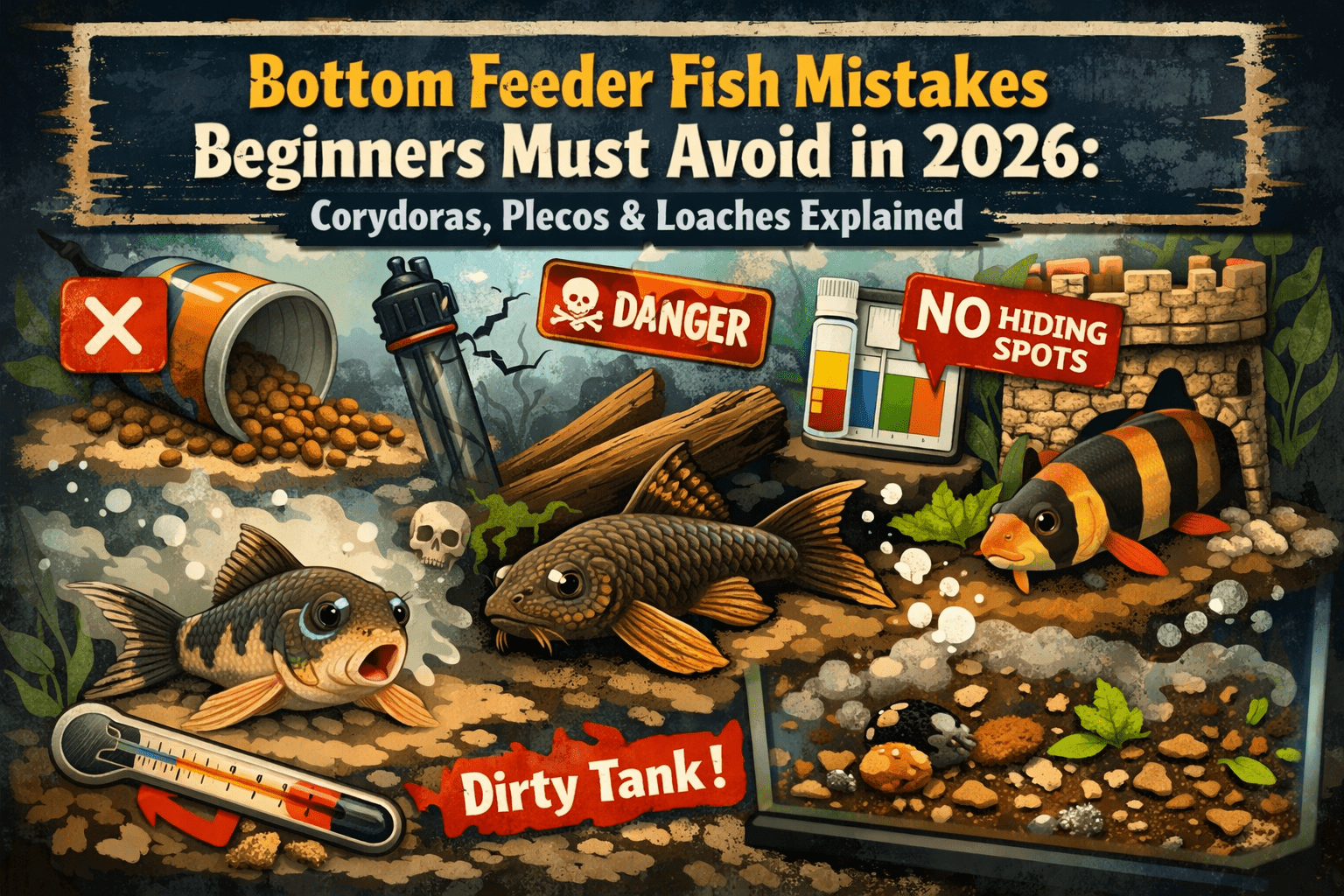
However, many beginners make serious mistakes when keeping bottom feeders. Some assume these fish only survive on leftover food, while others mix incompatible species or choose tanks that are too small. In reality, bottom feeder fish require proper nutrition, suitable tank mates, and species-specific care.
In this beginner’s guide, you will learn everything about keeping Corydoras, Plecos, and Loaches successfully in a community aquarium. We will cover feeding habits, tank setup, compatibility, common mistakes, and how to create a healthy bottom-feeding environment.
Why Bottom Feeder Fish Are Popular
Bottom feeders are highly popular because they serve both functional and aesthetic purposes in an aquarium.
Benefits of bottom feeder fish include:
- Cleaning leftover food from the substrate
- Adding activity to lower tank levels
- Improving community tank balance
- Displaying unique behaviors and personalities
- Helping beginners diversify fish movement in the tank
Unlike mid-water schooling fish or surface feeders, bottom feeders explore caves, driftwood, plants, and substrate areas continuously.
Many aquarists also enjoy their peaceful nature and social behavior.
Understanding the Different Types of Bottom Feeders
Not all bottom feeders are the same. Corydoras, Plecos, and Loaches have very different care requirements.
Corydoras Catfish
Corydoras are peaceful schooling catfish known for their gentle behavior and active personalities.
Key Characteristics
- Small size
- Social species
- Best kept in groups
- Prefer soft substrate
- Peaceful with most community fish
Popular beginner species include:
- Bronze Corydoras
- Panda Corydoras
- Peppered Corydoras
- Albino Corydoras
Corydoras spend most of their time searching the substrate for food. They are extremely active during feeding time and often interact socially with one another.
Plecos
Plecos are armored catfish famous for algae grazing and sucker mouths.
Important Beginner Warning
Many beginners purchase Plecos without realizing some species grow extremely large.
For example:
- Common Plecos can exceed 18 inches
- Bristlenose Plecos usually stay around 4–6 inches
For beginners, Bristlenose Plecos are often a better choice.
Pleco Traits
- Prefer driftwood
- Produce heavy waste
- Need strong filtration
- Some species become territorial
- Require vegetables and protein foods
Plecos are not “tank cleaners” that survive only on algae. They require dedicated feeding.
Loaches
Loaches are energetic bottom-dwelling fish with playful personalities.
Popular beginner-friendly loaches include:
- Kuhli Loach
- Yo-Yo Loach
- Zebra Loach
Loach Behavior
- Prefer hiding places
- Enjoy sand substrate
- Often active at night
- Need groups for comfort
- Can become highly social
Loaches are intelligent fish and may recognize feeding schedules quickly.
Best Tank Setup for Bottom Feeders
Creating the proper environment is critical for long-term success.
Tank Size
Choose tank size based on species.
Recommended Sizes
| Fish Type | Minimum Tank Size |
|---|---|
| Corydoras | 20 gallons |
| Bristlenose Pleco | 30 gallons |
| Kuhli Loach | 20 gallons |
| Common Pleco | 75+ gallons |
Overcrowding bottom feeders causes stress and competition for territory.
Best Substrate
Substrate choice matters greatly.
Ideal Options
- Fine sand
- Smooth gravel
- Rounded substrate
Avoid sharp gravel because it can damage sensitive barbels in Corydoras and injure loaches.
Sand is often the best choice for mixed bottom-feeder tanks.
Hiding Spaces
Bottom feeders need shelter to feel secure.
Use:
- Driftwood
- Caves
- PVC tunnels
- Rock structures
- Dense plants
Loaches especially appreciate shaded hiding areas.
Filtration and Water Quality
Bottom feeders are sensitive to poor water conditions because waste accumulates near the substrate.
Maintain:
- Stable filtration
- Weekly water changes
- Low ammonia and nitrite
- Clean substrate
Plecos produce heavy waste loads, making filtration especially important.
Feeding Bottom Feeder Fish Properly
One of the biggest beginner mistakes is assuming bottom feeders only eat leftovers.
This is false.
Bottom feeders require targeted nutrition.
Best Foods for Corydoras
Corydoras thrive on:
- Sinking pellets
- Protein wafers
- Frozen bloodworms
- Brine shrimp
- Micro pellets
Feed them after upper-level fish finish eating.
Best Foods for Plecos
Plecos need both plant matter and protein.
- Algae wafers
- Zucchini
- Cucumber
- Spinach
- Repashy foods
- Sinking carnivore pellets
Driftwood is also essential for some Pleco species.
Best Foods for Loaches
Loaches enjoy protein-rich diets.
Feed:
- Sinking pellets
- Frozen worms
- Snails
- Shrimp-based foods
- Live foods occasionally
Many loaches also help control pest snail populations.
Can Corydoras, Plecos, and Loaches Live Together?
Yes, many bottom feeders can coexist successfully when the aquarium is designed properly.
Good Combination Example
- 6 Corydoras
- 1 Bristlenose Pleco
- 5 Kuhli Loaches
This combination works well because each species uses the tank differently.
Potential Problems
Problems occur when:
- Tank is overcrowded
- Food competition becomes intense
- Aggressive Plecos dominate territory
- Large loaches harass smaller fish
Always research adult sizes before mixing species.
Common Beginner Mistakes with Bottom Feeders
Mistake 1: Assuming They Eat Leftovers Only
Bottom feeders still require dedicated feeding schedules.
Without proper nutrition, they become weak and stressed.
Mistake 2: Choosing the Wrong Pleco
Many stores sell Common Plecos to beginners without explaining adult size.
Always research growth potential.
Mistake 3: Keeping Schooling Fish Alone
Corydoras and many loaches should never be kept singly.
Recommended group sizes:
- Corydoras: 6+
- Kuhli Loaches: 5+
- Yo-Yo Loaches: 4+
Groups reduce stress and encourage natural behavior.
Mistake 4: Using Sharp Gravel
Sharp gravel damages sensitive barbels and bodies.
Soft substrate improves fish comfort dramatically.
Mistake 5: Overfeeding
Food that reaches the substrate too often creates:
- Ammonia spikes
- Algae blooms
- Poor water quality
Feed carefully and remove uneaten food.
Best Community Tank Mates
Bottom feeders are usually peaceful.
Good tank mates include:
- Angelfish
- Tetras
- Rasboras
- Gouramis
- Rainbowfish
- Livebearers
Avoid highly aggressive cichlids with peaceful bottom dwellers.
Ideal Water Parameters
Corydoras
- Temperature: 72–78°F
- pH: 6.5–7.5
Plecos
- Temperature: 74–82°F
- pH: 6.5–7.8
Loaches
- Temperature: 75–82°F
- pH: 6.0–7.5
Stable parameters are more important than chasing exact numbers.
How to Build a Balanced Bottom Feeder Community
A balanced setup includes:
- Different feeding zones
- Enough hiding areas
- Multiple feeding points
- Stable water quality
- Compatible personalities
Beginners should avoid adding too many bottom species at once.
Start simple and expand gradually.
Weekly Care Routine for Beginners
Daily
- Feed appropriate sinking foods
- Observe fish behavior
Weekly
- Water change
- Gravel vacuuming
- Glass cleaning
- Check filters
Monthly
- Deep filter maintenance
- Inspect driftwood and caves
- Review fish growth
Routine care prevents most common beginner problems.
Are Bottom Feeders Good for Beginners?
Yes, many bottom feeders are excellent beginner fish when cared for properly.
Best Beginner Choices
- Bronze Corydoras
- Panda Corydoras
- Bristlenose Pleco
- Kuhli Loach
These species are hardy, peaceful, and highly engaging.
Final Thoughts
Bottom feeder fish add life, activity, and diversity to community aquariums. Corydoras, Plecos, and Loaches each bring unique behaviors and personalities that make fishkeeping more enjoyable.
However, beginners should understand that bottom feeders are not simply “clean-up crews.” They require proper feeding, suitable tank setups, social groups, and good water quality.
When cared for correctly, these fish can thrive for many years and become some of the most entertaining residents in a freshwater aquarium.
Whether you prefer the peaceful schooling behavior of Corydoras, the algae-grazing habits of Plecos, or the playful energy of Loaches, building a healthy bottom-feeder community can greatly improve your aquarium experience in 2026.
Leave a Reply