
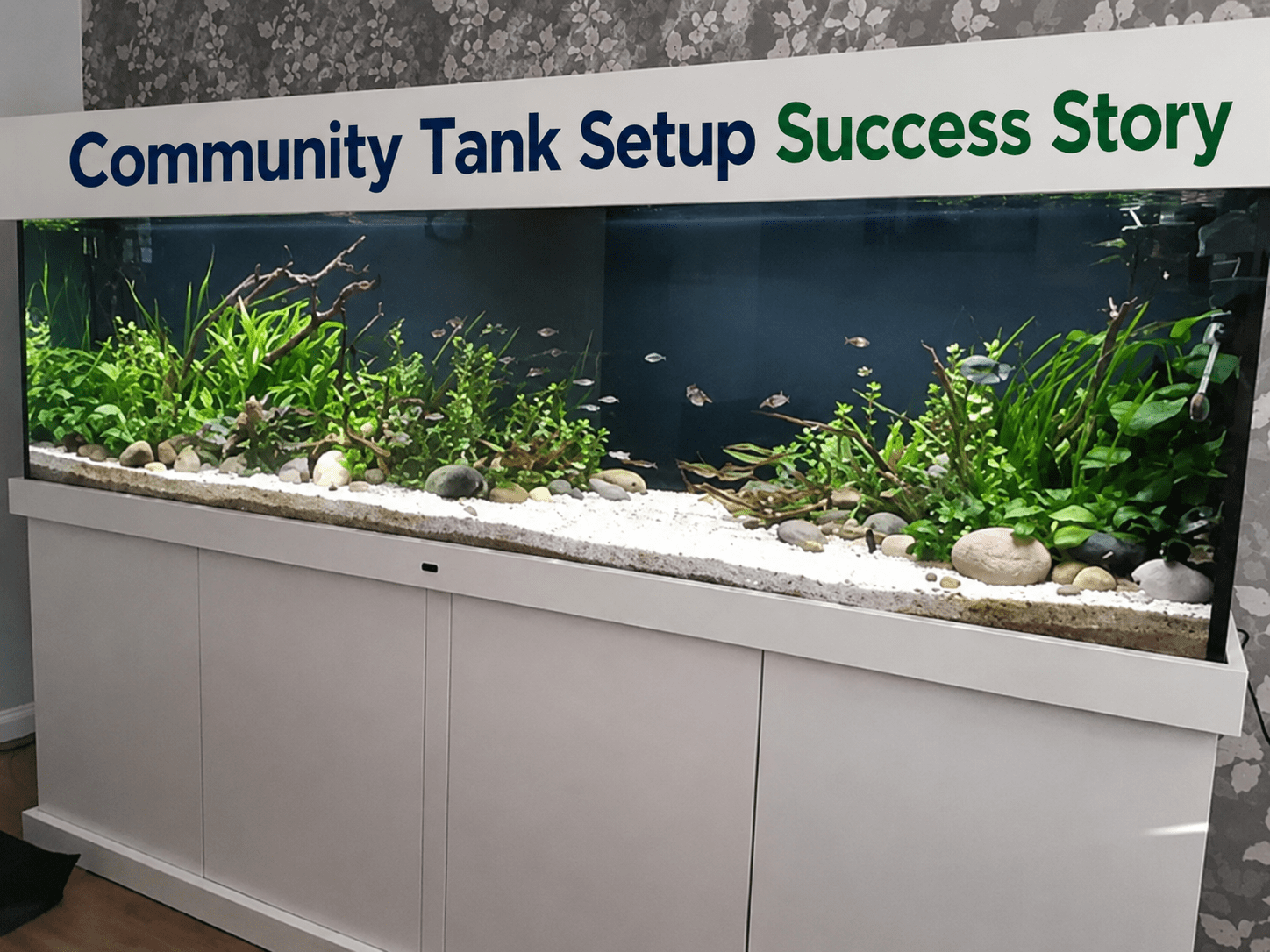

I’ve been in the aquarium hobby for a few years now, starting out like most beginners with more curiosity than knowledge and slowly learning through trial, error, and observation. Over time, what began as a simple interest in keeping fish turned into a genuine passion for building balanced, living ecosystems inside glass tanks. Each setup I’ve tried has taught me something new, and this community planted tank journey became the point where everything I learned finally started to come together in a meaningful way.
I still remember the day I brought my first aquarium home. It wasn’t planned for months or researched in depth. It was a spontaneous decision after standing too long in front of a fish store display tank, watching neon-colored fish move like tiny pieces of living light through a forest of green plants. In my mind, I had already imagined what my own tank would look like—calm, clean, vibrant, and effortless.
The reality was very different.
The tank I set up that first week looked nothing like the peaceful underwater world I had imagined. I filled it, added gravel, turned on a basic filter, and within a few days, I rushed into buying fish. I didn’t think about compatibility or water cycling. I just wanted movement in the tank.
At first, everything seemed fine. The fish swam, the water looked clear, and I felt like I had done everything right. But within a week, things started to change. The water turned slightly cloudy. One fish began hiding constantly. A plant I had added started to melt into the water, leaving behind a mess that I didn’t know how to fix. I was confused, frustrated, and honestly a little disappointed.
That was the moment I realized something important: an aquarium is not something you simply set up. It is something you grow.
I decided to start again, but this time slowly. I emptied the tank, cleaned it properly, and began learning what I had ignored the first time. I read about nitrogen cycles, beneficial bacteria, plant growth, and how fish actually depend on stable water conditions more than anything else. Instead of rushing, I let the tank run empty for weeks, just filtering and building stability.
When I finally started again, I approached it differently. I began with plants instead of fish. I added simple, hardy species like Java Fern and Anubias, attaching them carefully to wood and stone rather than burying them in gravel. I chose them not for appearance alone, but for their ability to survive in unstable beginner conditions. Slowly, the tank started to look less like an empty glass box and more like the beginning of a living environment.
Only after that did I think about fish.
This time, I wanted balance. I didn’t want random selections based on appearance. I wanted a community that could live together peacefully. That is when I first introduced a small school of Neon Tetra. Watching them settle into the tank was different from my first experience. Instead of chaos, there was harmony. They moved together in synchronized groups, exploring the planted areas without fear.
To support the lower part of the tank, I added a group of Corydoras catfish. They stayed close to the bottom, gently sifting through the substrate as if they were cleaning the tank in their own quiet rhythm. It didn’t feel like I was “filling” the aquarium anymore—it felt like I was building layers of life.
Later, I introduced a small team of Amano Shrimp. They were almost invisible at first, hiding among the plants, but soon they became one of the most active parts of the ecosystem. They cleaned algae off leaves, driftwood, and even the glass, constantly moving in their own quiet cycle of work.
The more I added, the more I realized something counterintuitive: success in this hobby is not about adding more—it is about adding correctly and slowly.
Around this time, I also began to understand feeding in a completely different way. Earlier, I had been feeding too much, thinking more food meant healthier fish. Instead, it only created waste and imbalance. So I reduced it. I began feeding small amounts once a day, sometimes even skipping a day entirely. I rotated simple foods, making sure nothing was excessive or left to rot in the tank.
The change was immediate. The water stayed clearer. The fish became more active. Even the plants seemed to respond positively, growing more steadily instead of struggling in murky conditions.
Water changes became another turning point in my journey. At first, I avoided them, thinking they would disturb the environment I was trying to build. But once I committed to a simple routine of weekly partial water changes, everything stabilized further. The tank stopped feeling unpredictable. It started to feel controlled, almost self-regulating.
There were still problems along the way, of course. Algae appeared when I gave too much light. Some plants melted and needed replacing. A few fish didn’t settle well and had to be rehomed. But each problem taught me something subtle about balance—about how everything in a tank is connected.
What surprised me most was how long it took for everything to “click.” It wasn’t days or weeks. It was months. Somewhere around the third month, I noticed I was no longer worrying about the tank every day. The water stayed stable. The plants were growing instead of struggling. The fish behaved naturally, not stressfully. The system had started to regulate itself.
That was the moment I understood what a true community planted tank really is.
It is not a collection of fish and plants placed in water. It is a living system where every element supports another. Plants process waste, shrimp manage algae, fish contribute nutrients, and bacteria silently maintain balance. Nothing works alone.
Now, my routine is simple and almost second nature. I observe the tank daily, feed lightly, and perform regular weekly water changes. I trim plants when needed, clean only what is necessary, and let most of the system take care of itself. The more I stop interfering, the more stable it becomes.
Looking back, the biggest transformation wasn’t in the tank—it was in my approach. I stopped treating it like a project and started treating it like a living ecosystem that needed time, patience, and respect.
Today, when I sit in front of the aquarium, I don’t see mistakes or maintenance tasks. I see a small world that I helped shape, but do not control completely. A world that breathes in its own rhythm.
And every time the light hits the water and the plants sway gently while the fish move in quiet formation, I am reminded of how far that first rushed setup has come—and how much beauty there is in simply letting things grow the right way.
Leave a Reply