

Introduction
Choosing fish food might look simple on the surface—just pick a brand, check the price, and feed your aquarium fish. But in 2026, aquarium nutrition has become more advanced, and the difference between low-quality and high-quality diets is more important than ever.
Many hobbyists unknowingly feed their fish fillers, artificial additives, and poorly balanced formulas that lead to weak immunity, faded colors, slow growth, and even shortened lifespan. The truth is simple: your fish are only as healthy as what you feed them.
That’s why understanding premium fish food ingredients is essential for anyone serious about maintaining a thriving aquarium. This guide will break down what actually matters in fish nutrition, what to avoid, and how to identify truly premium food.
Why Fish Food Quality Matters More in 2026
Aquarium keeping has evolved significantly. Today’s ornamental fish are often selectively bred for brighter colors, unique patterns, and specific body shapes. These traits demand better nutrition than ever before.
Poor-quality fish food may lead to:
- Weak immune systems
- Dull or faded coloration
- Digestive issues and bloating
- Algae overgrowth in tanks (from fillers)
- Shortened lifespan
On the other hand, foods made with premium fish food ingredients improve:
- Growth rate and body structure
- Color vibrancy
- Disease resistance
- Water quality stability
In simple terms, better ingredients equal healthier fish and a cleaner aquarium.
What Are Premium Fish Food Ingredients?
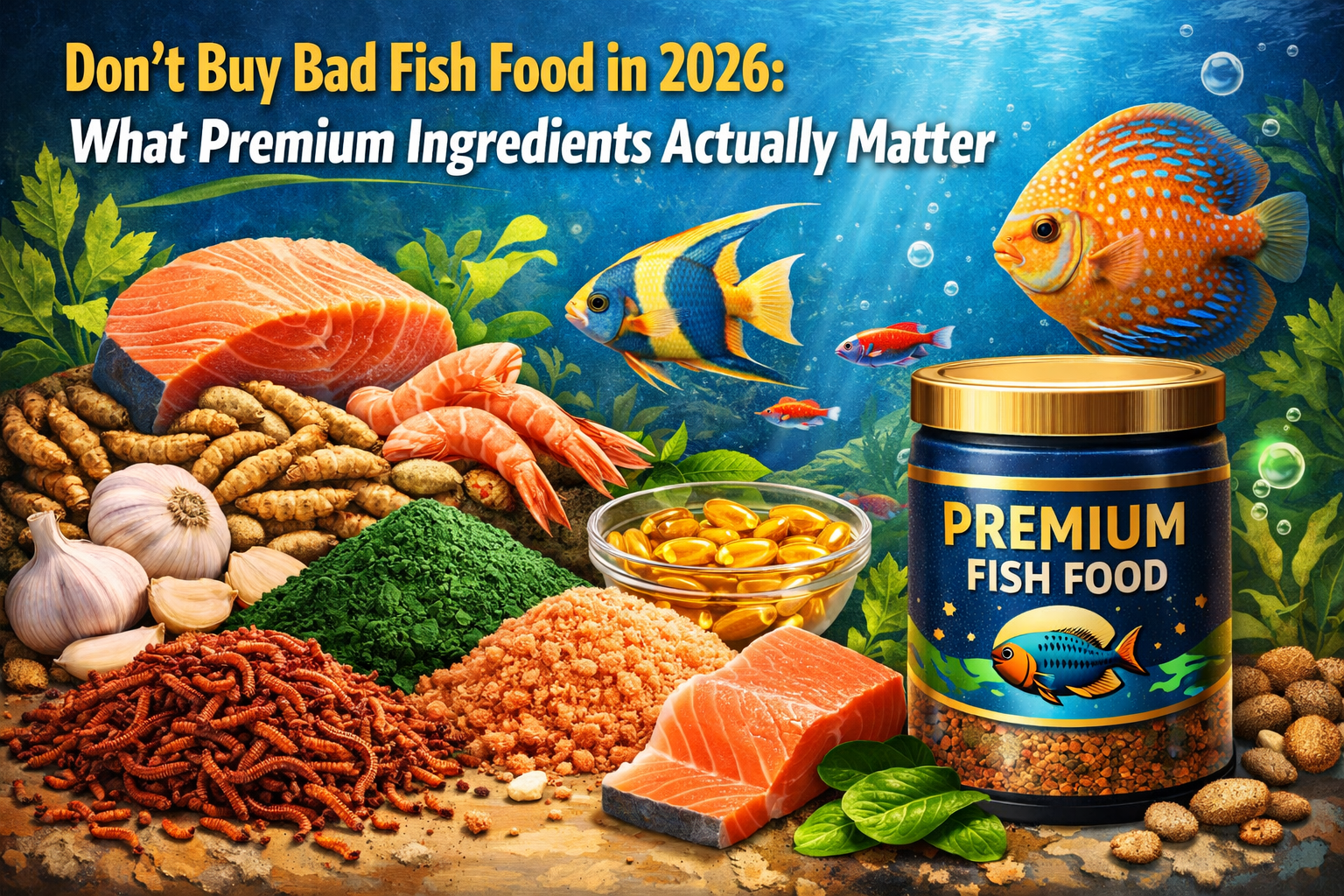
Not all fish food is created equal. Premium formulations are built using high-quality protein sources, natural color enhancers, essential vitamins, and easily digestible materials.
Let’s break down what you should actually look for.
1. High-Quality Protein Sources
Protein is the foundation of fish growth and muscle development.
Best premium protein sources include:
- Whole fish meal (not generic “fish meal”)
- Shrimp meal
- Krill meal
- Squid or marine proteins
- Insect-based protein (like black soldier fly larvae)
These are highly digestible and closely match what fish would eat in nature.
Avoid:
- Unspecified “animal by-products”
- Low-grade soy-heavy protein blends
- Excess plant fillers used to inflate protein percentage
High-quality protein is one of the most important premium fish food ingredients you should prioritize.
2. Natural Color Enhancers
Fish coloration is one of the biggest reasons hobbyists upgrade food quality.
Natural enhancers include:
- Astaxanthin (from krill or algae)
- Spirulina
- Marigold extract
- Canthaxanthin (controlled levels)
These compounds help enhance reds, oranges, yellows, and blues naturally.
Avoid:
- Artificial dyes
- Synthetic color sprays
- Over-processed pigments with no nutritional value
Natural color enhancers are a hallmark of premium fish food ingredients because they improve appearance without harming fish health.
3. Digestible Carbohydrates (Not Fillers)
Carbohydrates provide energy, but poor-quality carbs often become waste.
Good sources:
- Wheat germ (excellent for digestion)
- Rice flour (in controlled amounts)
- Spirulina-based plant matter
Avoid:
- Excess corn or corn gluten
- Cheap wheat fillers as main ingredients
- Indigestible starch-heavy binders
One of the most overlooked aspects of premium fish food ingredients is digestibility. If fish cannot absorb it, it just pollutes the water.
4. Essential Fatty Acids (Omega-3 & Omega-6)
Fats are critical for energy, immune support, and breeding health.
Premium sources include:
- Fish oil (high EPA and DHA levels)
- Krill oil
- Marine algae oil
These fats support:
- Strong immunity
- Healthy reproduction
- Better growth efficiency
Avoid rancid or low-grade fats, which can harm fish health over time.
5. Vitamins and Minerals
A balanced vitamin profile ensures long-term health.
Key vitamins:
- Vitamin A (vision and growth)
- Vitamin C (immune support)
- Vitamin D3 (bone and scale health)
- Vitamin E (cell protection)
Essential minerals:
- Calcium
- Zinc
- Magnesium
Premium fish food ingredients always include stabilized vitamins that don’t break down quickly in water.
6. Probiotics and Digestive Enzymes
Modern premium fish foods often include gut health support.
Benefits:
- Better digestion
- Reduced waste output
- Improved nutrient absorption
- Cleaner aquarium water
Look For:
- Bacillus strains
- Enzyme blends (protease, amylase)
This is a newer trend in 2026 but becoming a strong marker of premium fish food ingredients.
Ingredients You Should Avoid
Just as important as what to include is what to avoid.
Red flags in fish food:
- “Meat meal” without specification
- Artificial preservatives like BHA/BHT in high amounts
- Excess fillers (corn, wheat, soy as main ingredients)
- Artificial colors
- Sugar or sweeteners
- Unknown “fish derivatives”
These ingredients often reduce nutritional value and increase tank pollution.
How to Read a Fish Food Label Like a Pro
Most packaging is designed to look “healthy,” but ingredient order tells the real story.
Simple rule:
Ingredients are listed by weight.
If the first 3 ingredients are:
- Fish meal
- Shrimp meal
- Spirulina
That’s a strong indicator of quality.
If the first 3 are:
- Wheat
- Corn
- Soy flour
That’s a filler-heavy product.
Always prioritize transparency when evaluating premium fish food ingredients.
Different Fish Types Need Different Premium Ingredients
Not all fish eat the same way.
1. Tropical Community Fish
- Balanced protein
- Spirulina
- Moderate fats
2. Carnivorous Fish
- High protein (krill, shrimp, fish meal)
- Low plant fillers
3. Herbivorous Fish
- Spirulina-heavy diets
- Vegetable-based proteins
- High fiber content
Understanding species needs ensures you are using the right premium fish food ingredients for your tank.
Signs You Are Feeding High-Quality Fish Food
You can often tell within a few weeks if your fish food is working.
Positive signs:
- Brighter coloration
- Active swimming behavior
- Clear water (less waste)
- Healthy appetite
- Faster growth in juveniles
If you don’t see improvements, the ingredient quality may be poor.
Common Mistakes Aquarium Hobbyists Make
Even experienced hobbyists make these errors:
- Overfeeding low-quality food instead of upgrading quality
- Assuming expensive always means better (not always true)
- Ignoring ingredient labels
- Feeding all fish the same diet
- Not rotating food types
Avoiding these mistakes helps maximize the benefits of premium fish food ingredients.
Future of Fish Nutrition in 2026 and Beyond
The industry is moving toward:
- Insect-based protein as a standard
- Sustainable marine sourcing
- Functional foods (immune-boosting formulas)
- Microbiome-focused nutrition
This means the definition of premium fish food ingredients will continue evolving toward more natural and functional diets.
Conclusion
Feeding fish is no longer just about keeping them alive—it’s about optimizing health, color, behavior, and long-term wellbeing. The difference between average and exceptional aquarium results comes down to one thing: ingredient quality.
By understanding premium fish food ingredients, you can avoid low-quality fillers, reduce tank issues, and create a thriving aquatic environment.
In 2026, smart aquarium keepers don’t just feed their fish—they nourish them intentionally.
FAQ
1. What are premium fish food ingredients?
They are high-quality protein sources, natural color enhancers, essential vitamins, and digestible compounds that improve fish health and aquarium balance.
2. Why is fish food quality important?
Poor-quality food leads to disease, poor coloration, and dirty water, while premium ingredients improve overall fish vitality.
3. How do I know if fish food is premium?
Check the first ingredients list—look for whole fish, shrimp, krill, and spirulina instead of fillers like corn or wheat.
4. Can premium fish food improve color?
Yes, natural pigments like astaxanthin and spirulina significantly enhance fish coloration.
Leave a Reply